Geopolitical tensions in the Middle East have caused disruptions and blockages in maritime traffic through the Strait of Hormuz, one of the most strategic points for global maritime trade. Not only do oil and gas, but also fertilizers and industrial metals, essential for European supply chains. The ongoing disruptions are already affecting delivery times, raw material availability, and company costs.
According to analyses, maritime traffic through the strait — historically navigable by hundreds of vessels every day — has seen a significant reduction, with many ships avoiding the passage for safety reasons. This has turned the blockage into a real crisis, with direct impacts on the trade of fertilizers, metals, and natural gas.
Urea: the Shortage Challenging Agricultural Supply Chains
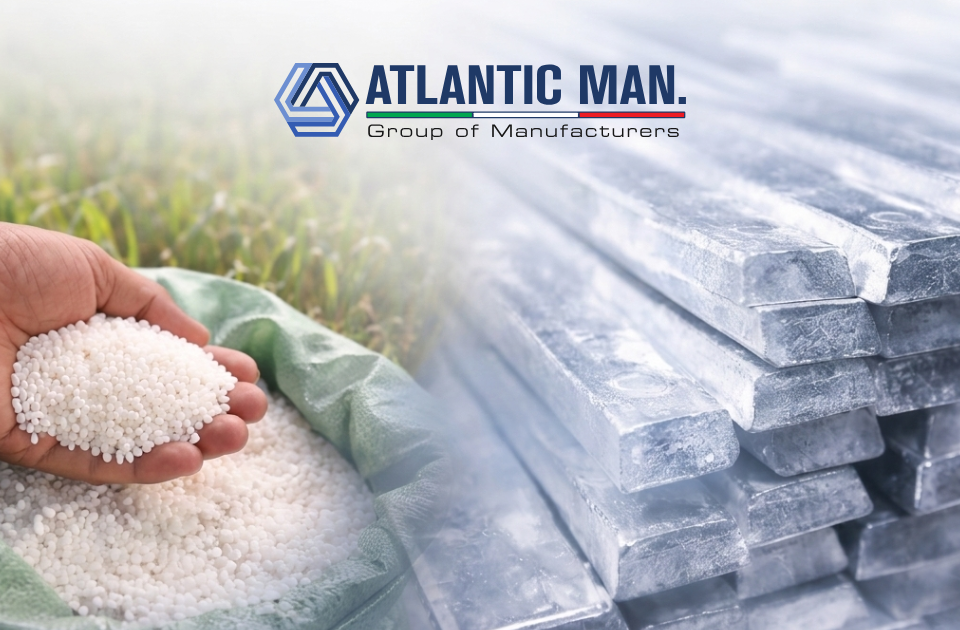
Urea is one of the most widely used fertilizers in the world, thanks to its high nitrogen content (around 46%), which promotes plant growth, photosynthesis, and leaf development, improving the yield and quality of crops such as wheat, maize, rice, and vegetables. Beyond its agricultural role, urea is also used as an additive in animal feed and in certain industrial processes, making it a key indicator of the stability of the global agri-food supply chain.
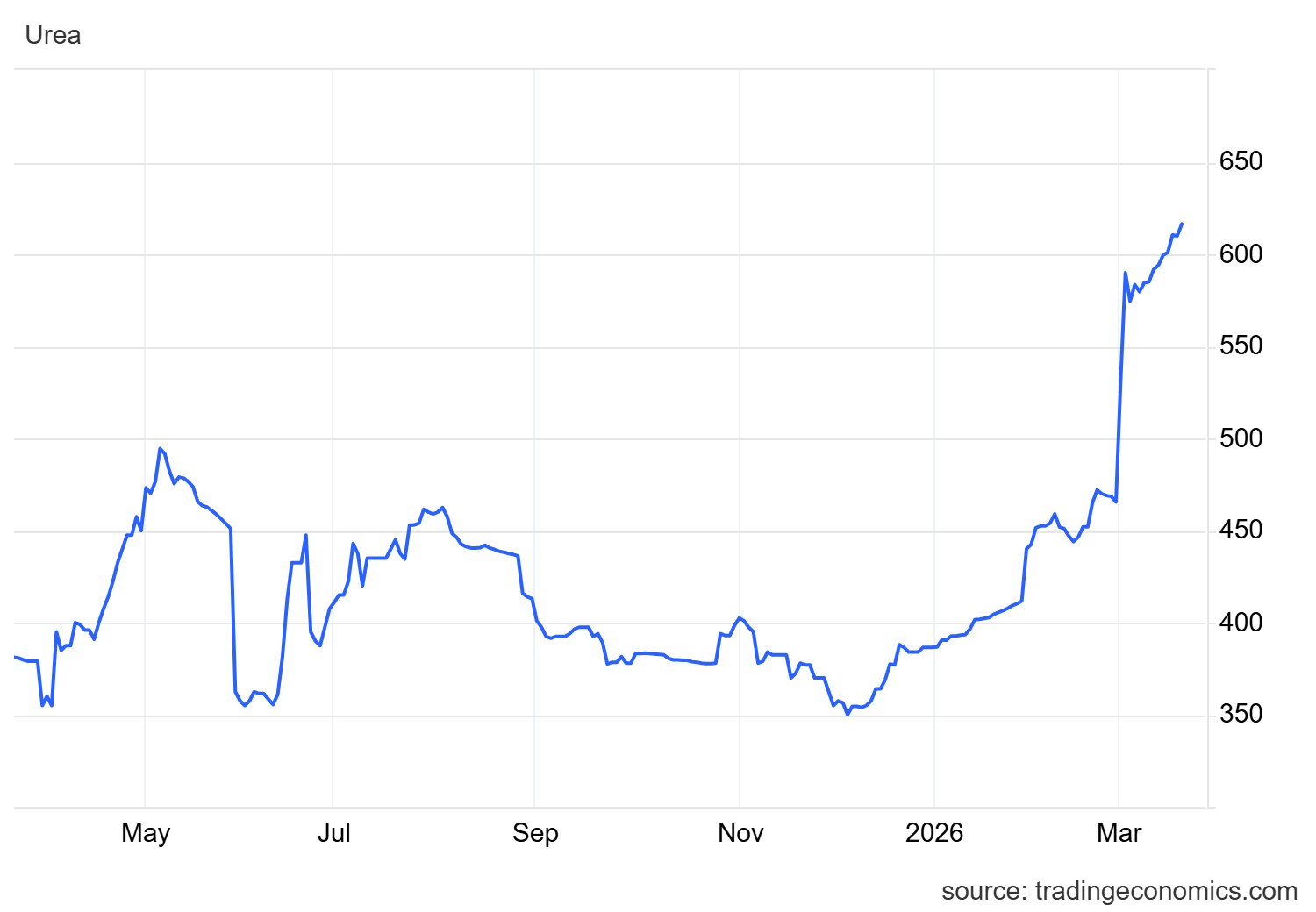
Today, the market is measured less by price than by physical availability. According to TradingEconomics, urea is trading around 450 USD per ton, higher than pre-pandemic levels but below the peaks of 2022. The real problem, however, is product scarcity: production in the Persian Gulf, which accounts for about 30–35% of global trade, has slowed due to geopolitical tensions and blockages in the Strait of Hormuz, and many European distributors report empty shelves.
Companies that have so far adopted a “just-in-time” approach, purchasing fertilizers at the last minute, are now facing difficulties: without strategic stockpiles, businesses risk immediate shortages, with direct impacts on agricultural production, delays in the supply chain, and pressure on profit margins.

Aluminium, Stainless Steel, and Other Industrial Metals

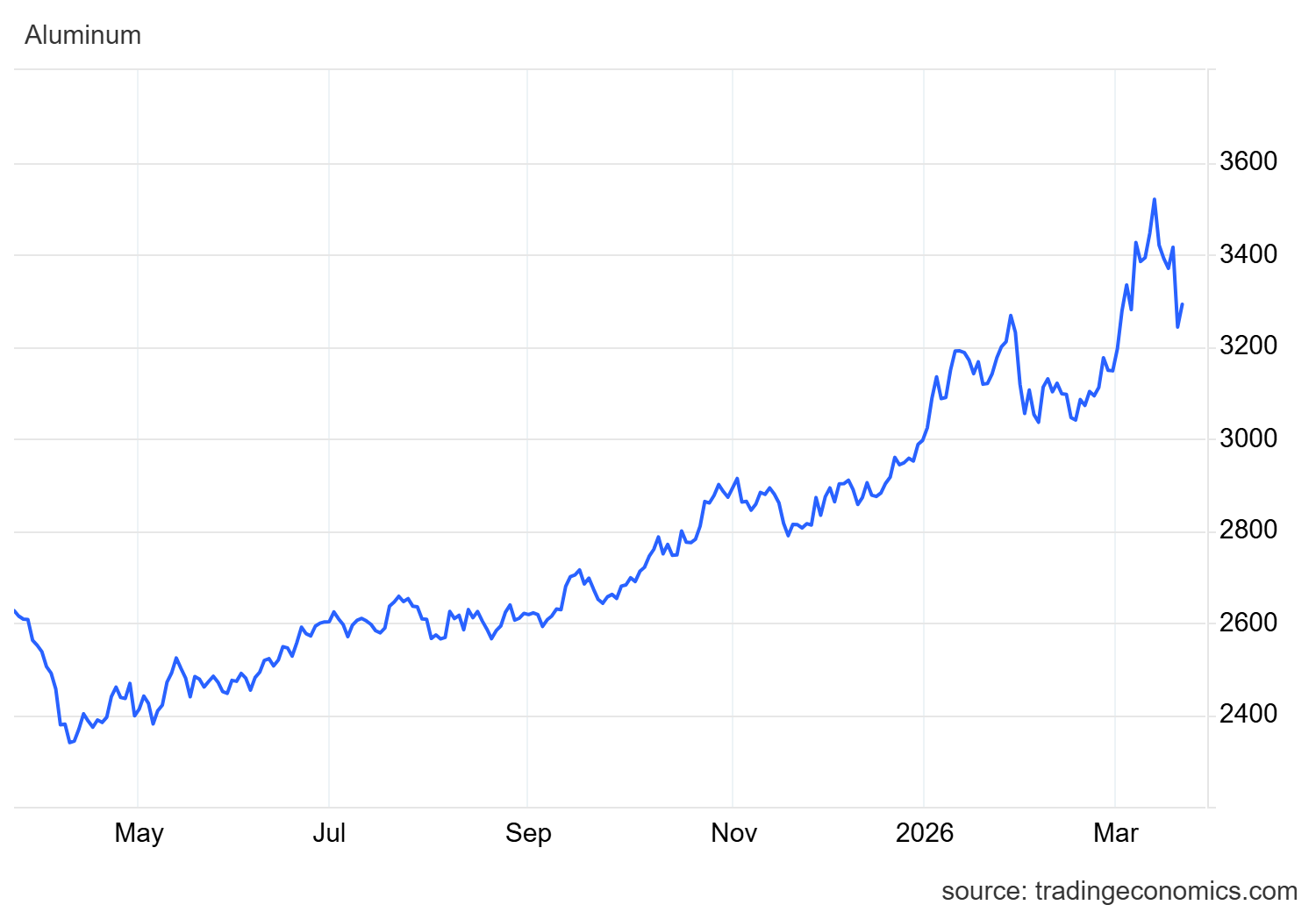
Industrial metals are also experiencing tensions similar to those affecting fertilizers. Aluminium, currently priced around 3,100 USD per ton with significant year-on-year growth, remains essential for numerous industrial sectors. A substantial portion of its global production passes through strategic trade routes, including the Strait of Hormuz, making the market particularly sensitive to logistical disruptions.
Similarly, stainless steel and other metals rely heavily on energy, particularly natural gas, required to heat and process metals in steel and metallurgical plants. With rising gas prices and difficulties in raw material transit, production costs increase and availability for European industry decreases, quickly transferring pressure along the entire value chain.
In summary, physical scarcity, logistical slowdowns, and high energy costs make the markets for aluminium, stainless steel, and other industrial metals particularly fragile and volatile, with direct impacts on production and corporate margins.
The Regulatory Factor: CBAM
Adding to this scenario is the implementation of the Carbon Border Adjustment Mechanism, the mechanism introduced by the European Union to adjust the carbon cost of imports of energy-intensive products, including fertilizers and aluminium.
The CBAM is not merely an environmental measure: it directly affects the cost structure for companies relying on extra-EU supplies. In a context of already high and volatile prices, regulatory impact becomes an additional factor to consider in industrial planning.
From Reaction to Strategy
The emerging picture is clear: geopolitical instability, commodity volatility, and regulatory pressure are turning supply chain management into a true strategic lever.
Today, simply reacting to price increases or delivery delays is no longer sufficient: companies must adopt a proactive and structured approach, based on:
Relying on European or local partners can become a competitive advantage: it ensures greater stability, reduces the risks of international disruptions, and allows for rapid response to price fluctuations or supply chain interruptions.
The Value of a Reliable Industrial Partner
In this context, the strength of the supply chain plays a central role. Every link must contribute to ensuring efficiency, quality, and operational continuity.
Atlantic Man. supports companies in the sector with solutions designed to optimize processes and strengthen production reliability. At a time when fertilizers, energy, and strategic raw materials are subject to significant fluctuations, relying on a well-structured partner means reducing operational risk and protecting business stability.
Today, logistics is no longer just a matter of transportation, but a question of industrial planning and strategic vision.